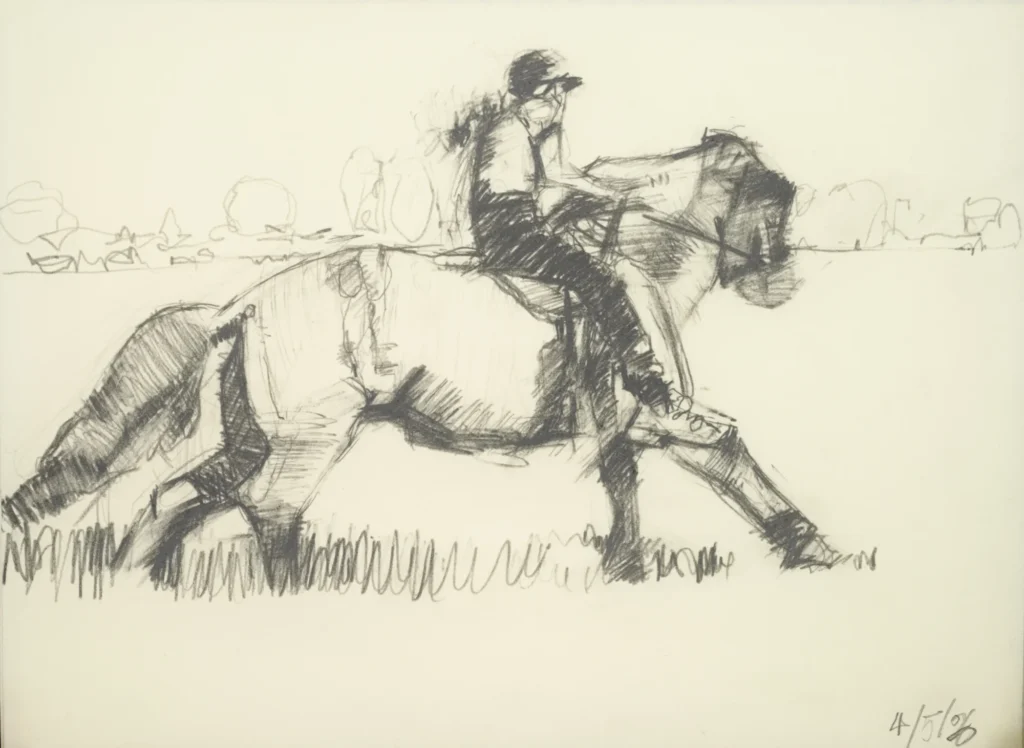
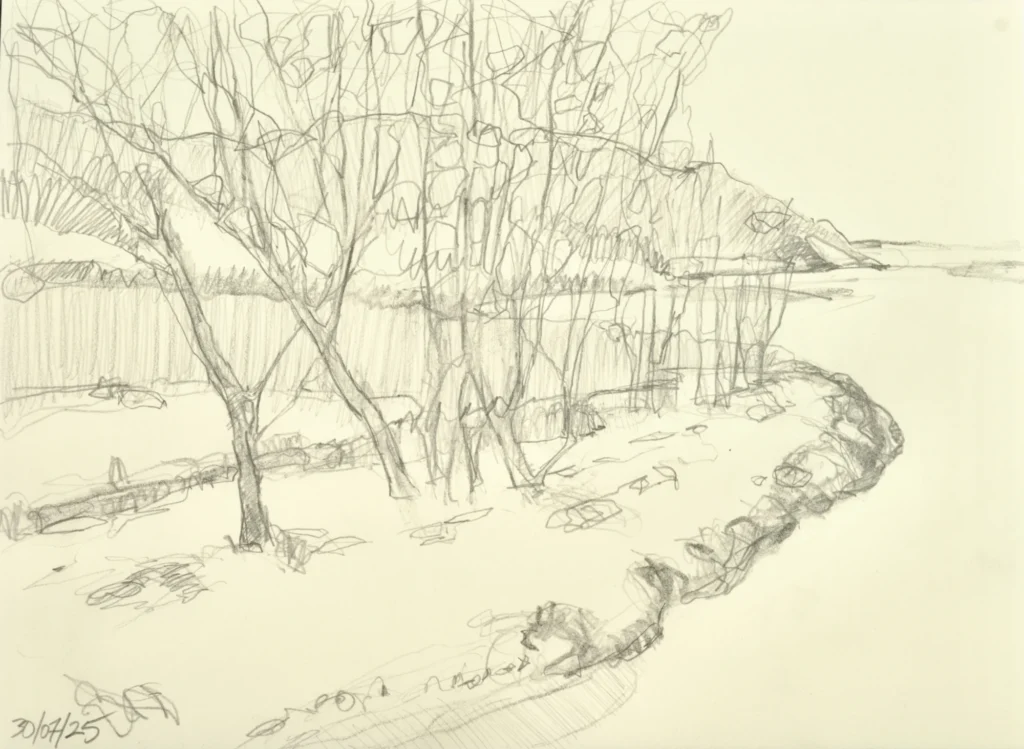
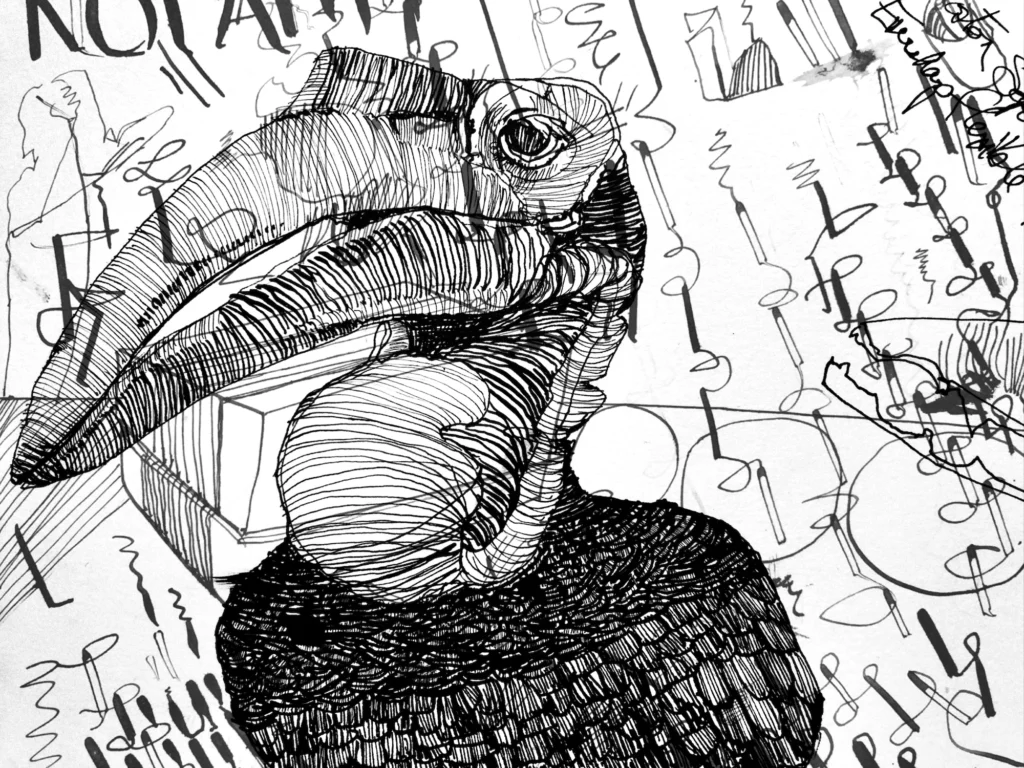
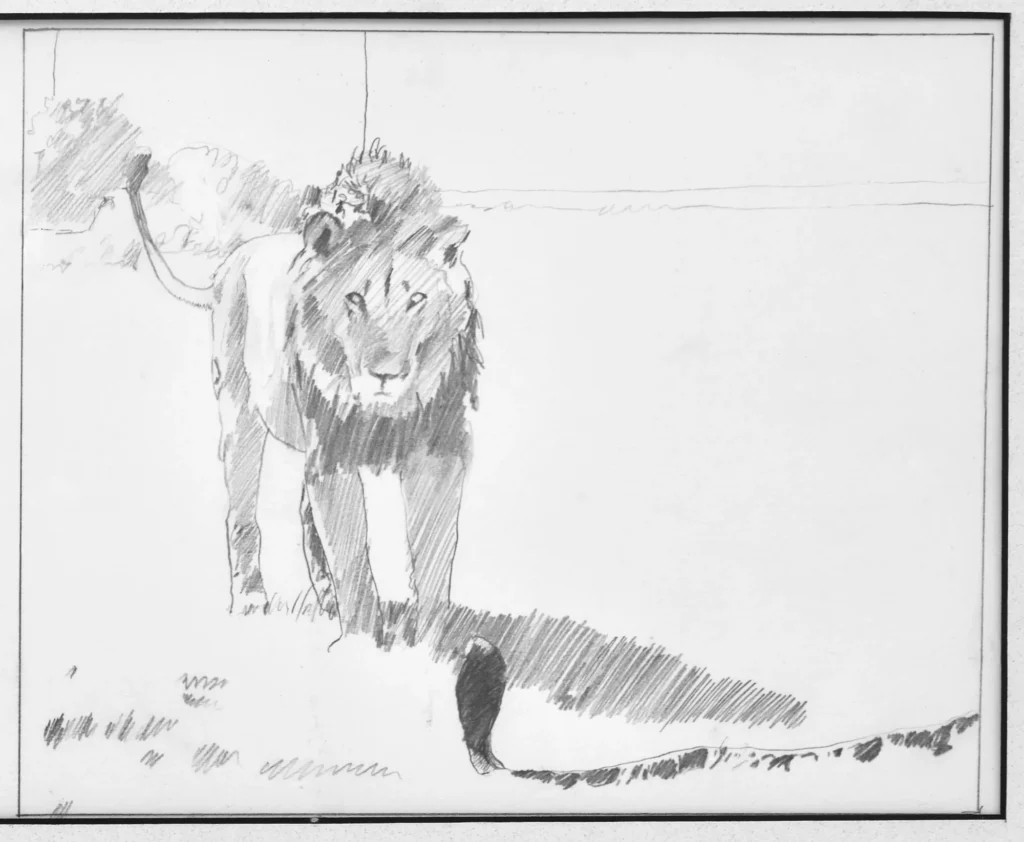
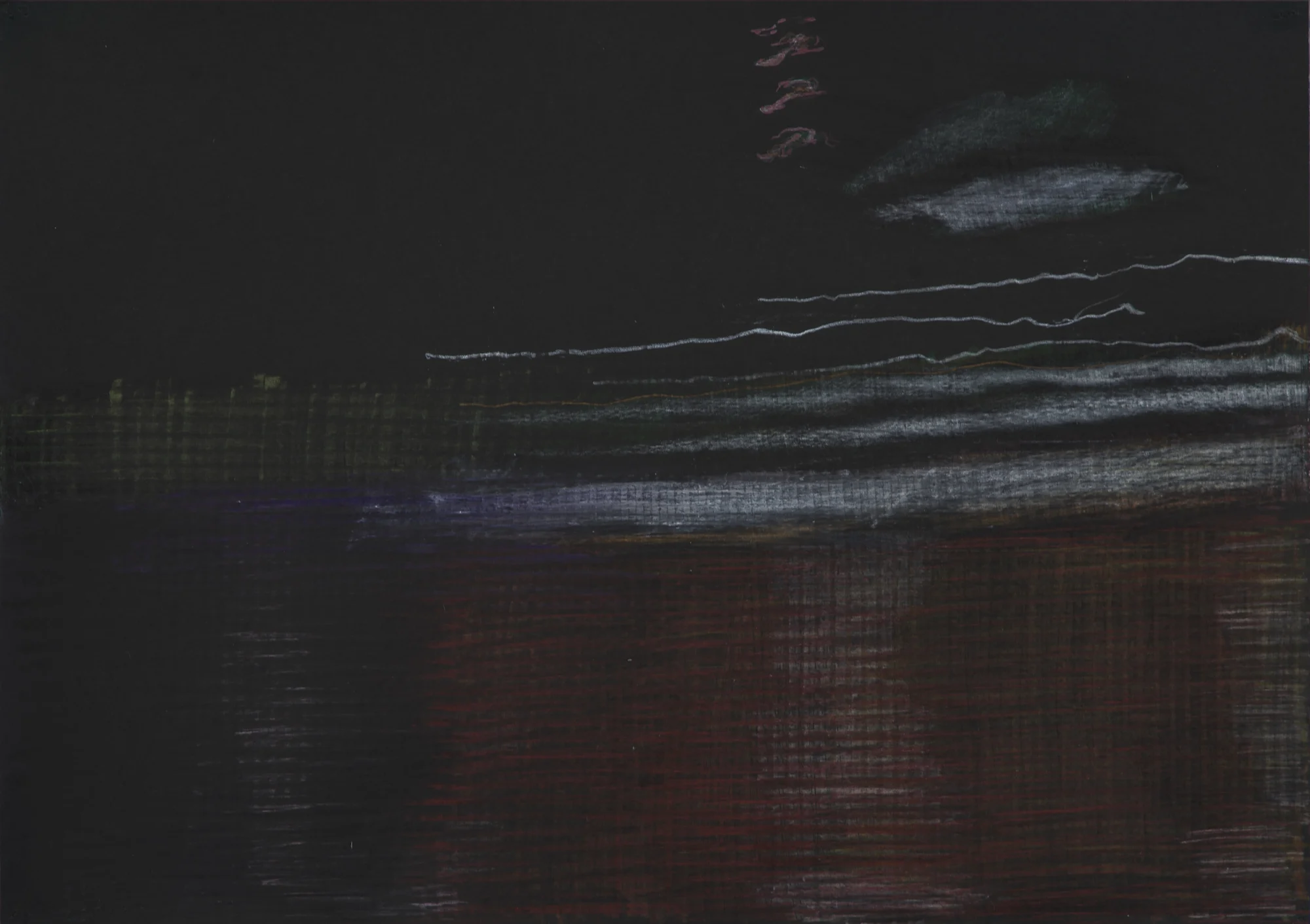
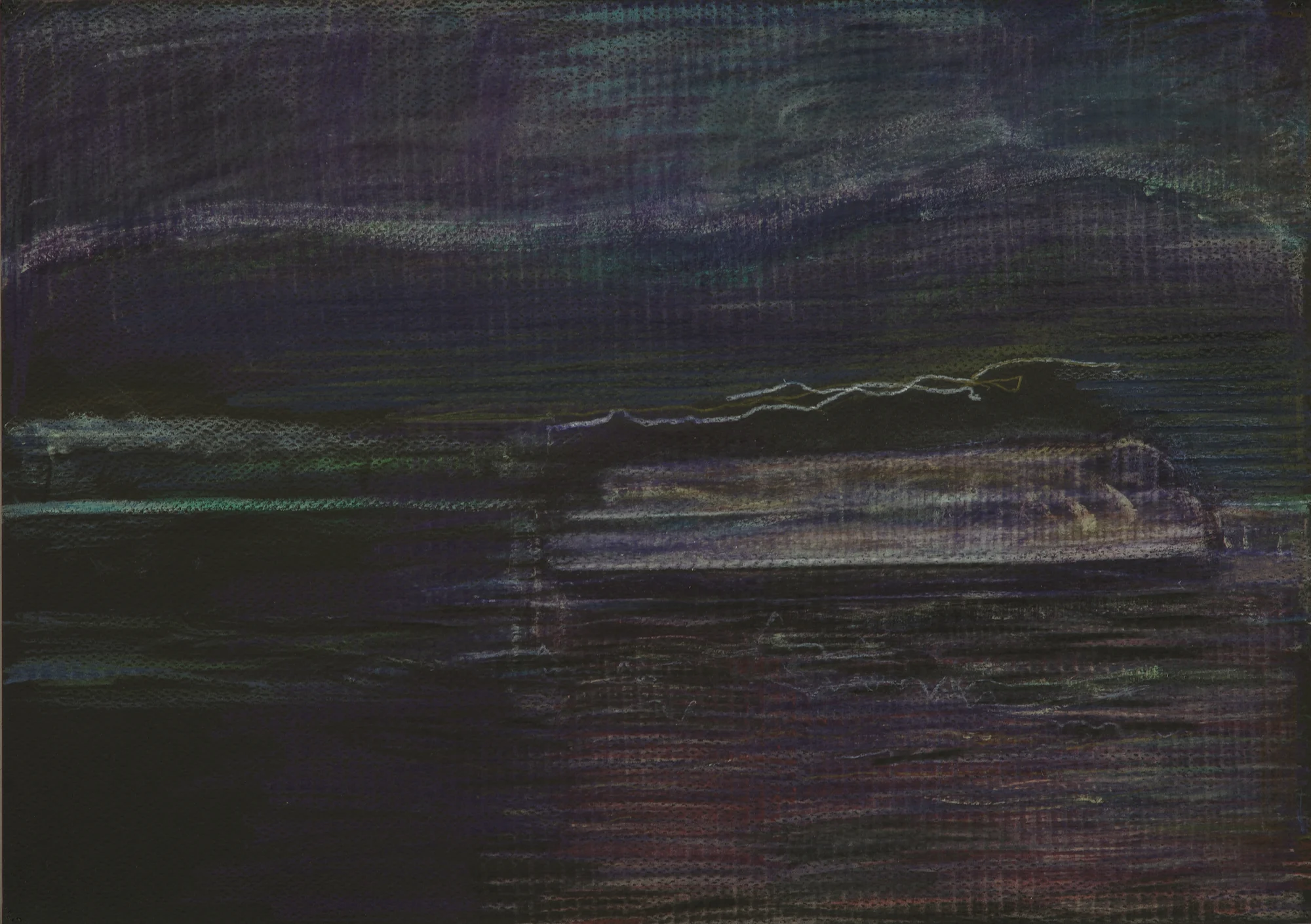
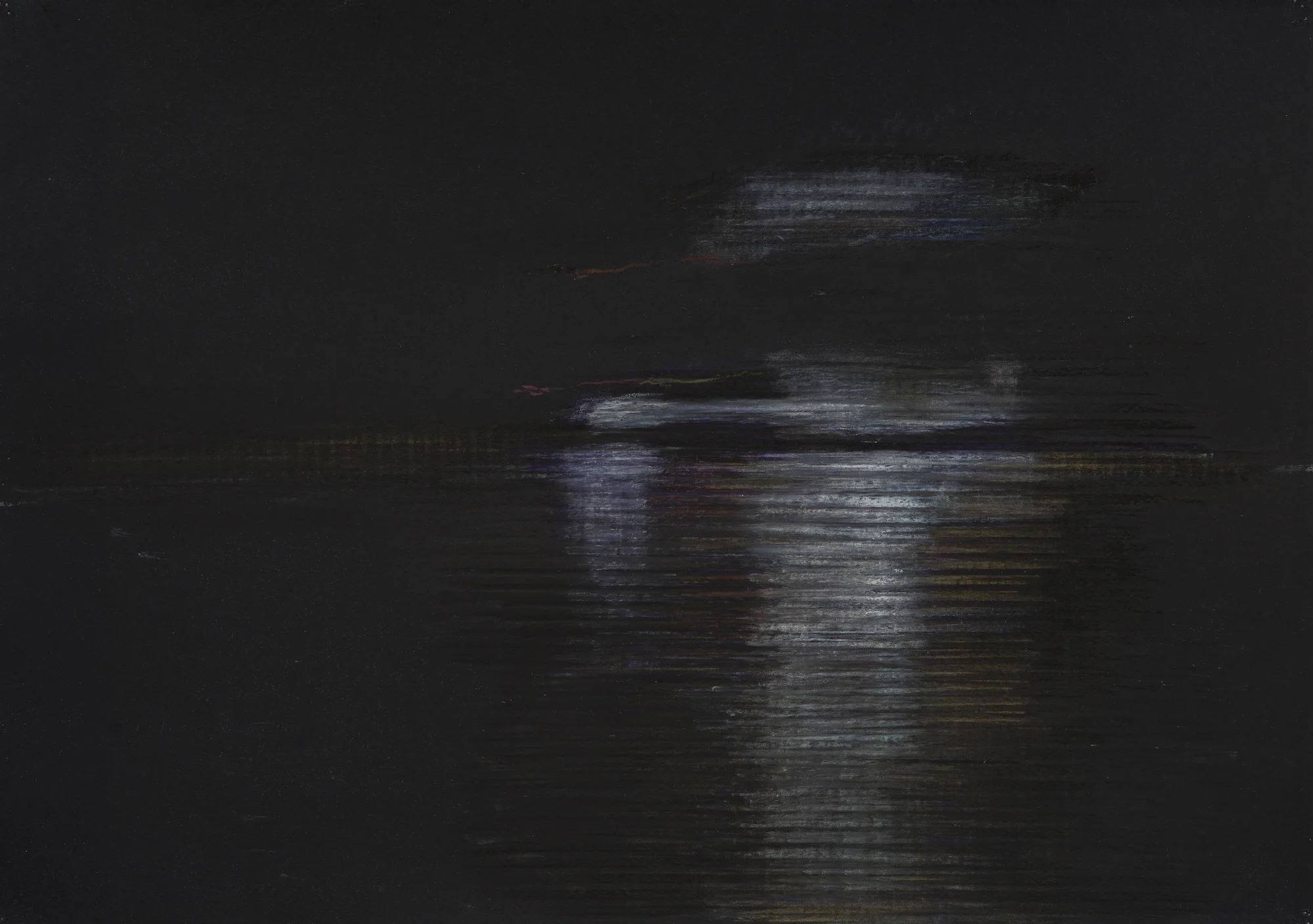
A triptych of preparatory drawings about the Seto Inland Sea of Japan. When working on a tricky subject, such as electric light effects upon a seascape at night-in the back of my mind there’s often an eloquent resolution completed by a past master painter. I’m inspired by how, for example, Frans Hals manages to orchestrate, what seems like, twenty seven separate tones of black to depict a portrait subject’s costume. Or how Berthe Morisot can paint any fabric or landscape with epic abstract expressionism to rival much later modern masters. In this case it is Nocturne in Black and Gold, the Falling Rocket painted by J.M. Whistler in 1875. At that time, a notorious avantgarde work that placed free emotional expression above straight description. Although I wasn’t thinking about the Falling Rocket directly, Whistler’s approach rings true in my response to the compelling subject of this study.